Lighting does more than illuminate a room — it sets the mood, defines the space, and influences how every other design element is perceived. Yet lighting is frequently treated as an afterthought, addressed only after furniture and wall colors are chosen. Here’s how to approach lighting as the design foundation it truly is.
The Three-Layer Approach
Professional designers think of lighting in three layers. Each serves a different purpose, and a well-lit room includes all three.
1. Ambient Lighting (General Illumination)
This is your base layer — the light that allows you to move safely through a room. Ambient lighting comes from ceiling fixtures, recessed lights, or a pendant light that provides overall illumination. The goal is even, diffuse light that eliminates dark corners without creating harsh shadows.
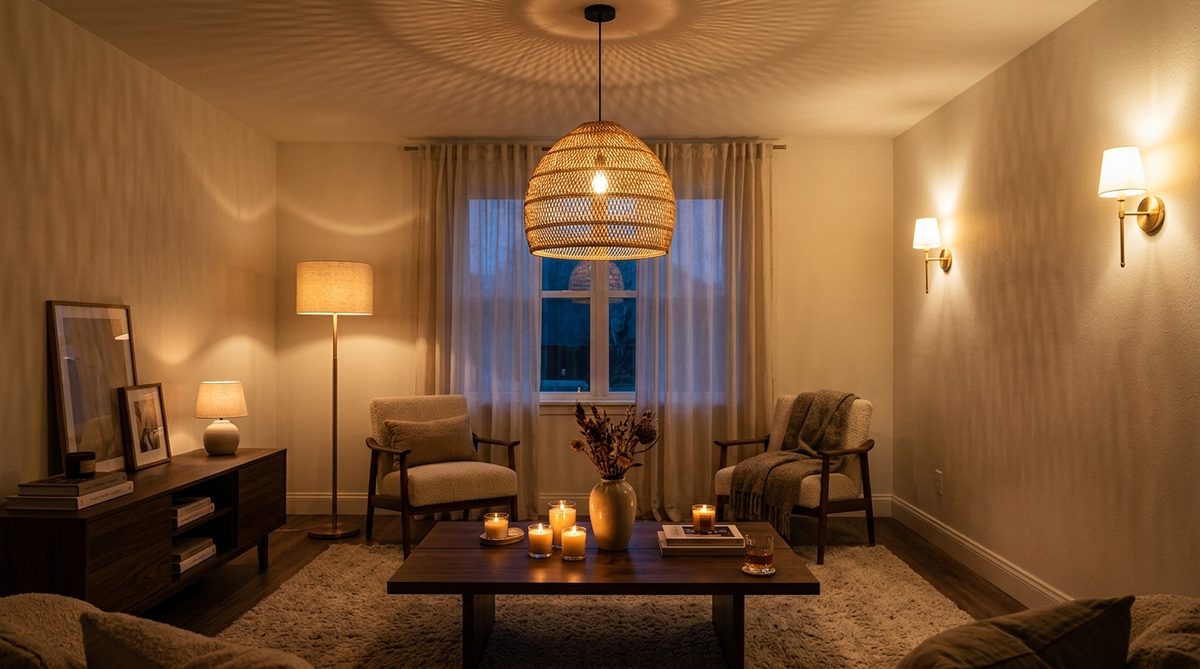
For rooms with low ceilings, a flush-mount fixture works well. For higher ceilings, a rattan pendant light adds both ambient light and visual interest, casting warm, textured shadows that enhance the room’s atmosphere.
2. Task Lighting (Functional Illumination)
Task lighting serves a specific purpose — reading, cooking, working, or applying makeup. This layer is directed and focused, brighter than ambient light, and positioned close to where the activity happens.
A smart LED floor lamp next to a reading chair is a perfect example. Its adjustable brightness and color temperature let you switch from focused reading light to softer ambient light with a voice command.
3. Accent Lighting (Decorative Illumination)
Accent lighting highlights architectural features, artwork, or decorative objects. It’s the layer that adds drama and depth. Think LED strips behind a TV, uplights washing a textured wall, or a small spotlight on a piece of art.
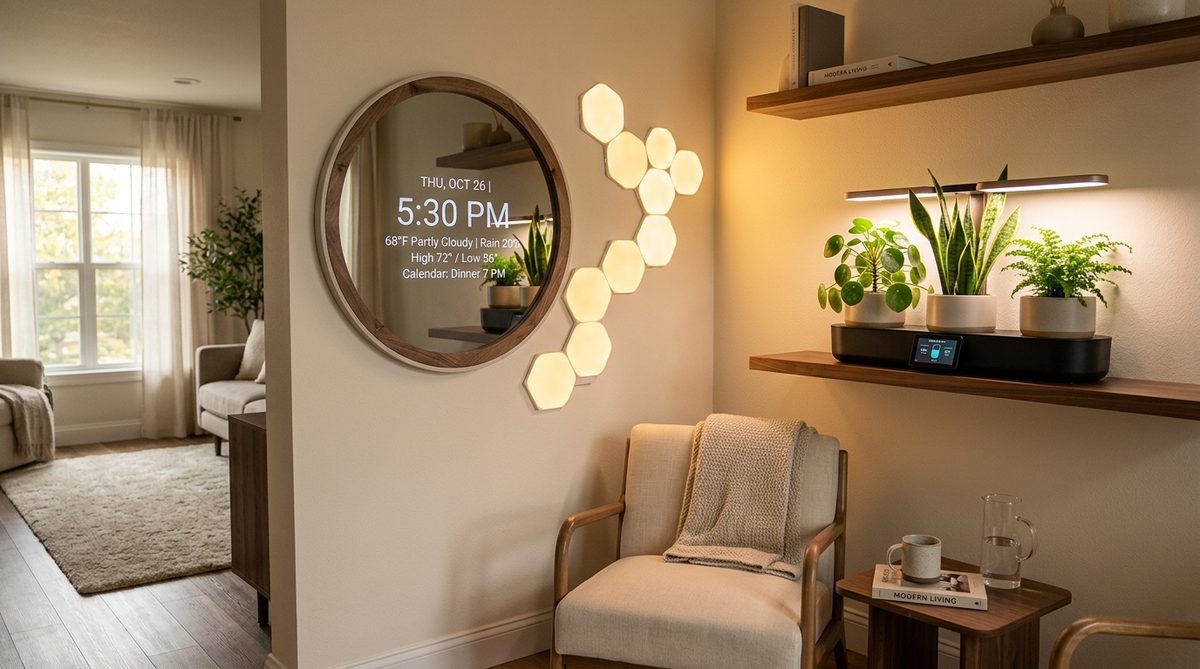
Our modular LED lighting panels blur the line between accent lighting and art. Arrange them in geometric patterns on a feature wall to create a customizable light installation that changes color and intensity on command.
Understanding Color Temperature
Light color is measured in Kelvin (K). Lower numbers produce warm, yellowish light; higher numbers produce cool, bluish light. Choosing the right temperature for each room is crucial:
- 2700K-3000K (Warm White): Living rooms, bedrooms, dining rooms — creates a cozy, relaxing atmosphere
- 3500K-4000K (Neutral White): Kitchens, bathrooms, workspaces — bright enough for tasks without feeling clinical
- 5000K+ (Daylight): Reading nooks, craft rooms — mimics natural daylight for maximum visibility
Most homes benefit from warm white (2700K-3000K) in living spaces. It flatters skin tones, enhances warm color palettes, and creates the cozy ambiance that makes a house feel like home.
Room-by-Room Recommendations
Living Room
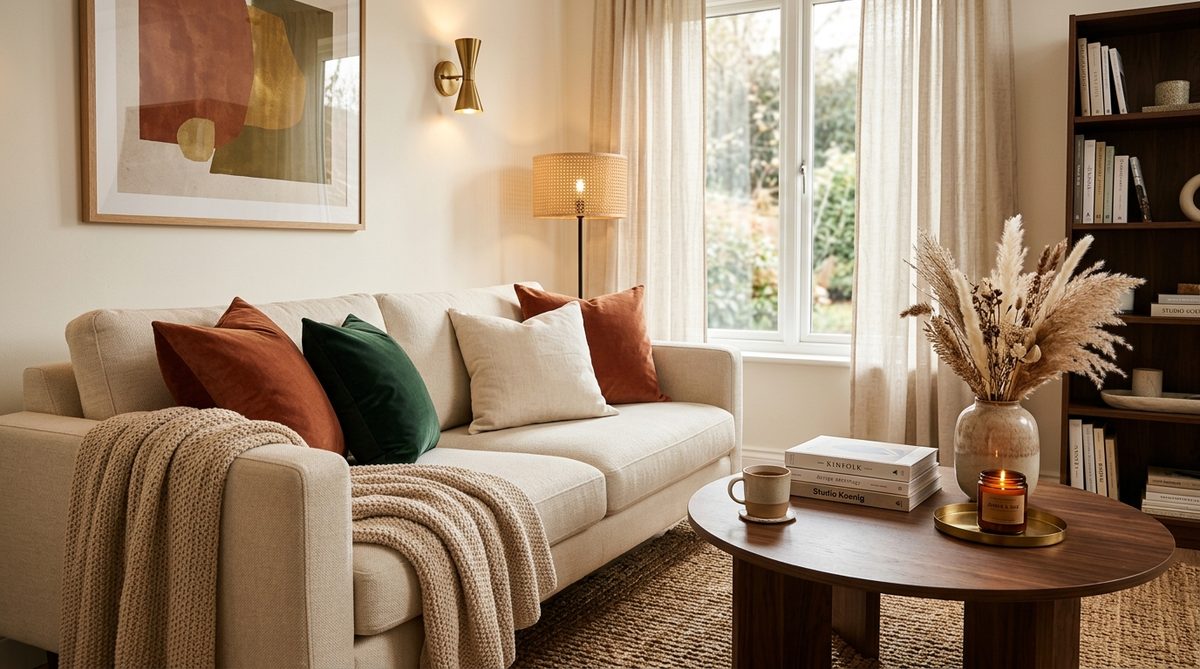
Combine a pendant or ceiling fixture for ambient light, a floor lamp near seating for task light, and table lamps or LED strips for accent. Use warm bulbs throughout. A rattan pendant over a coffee table creates a beautiful focal point.
Bedroom
Bedside table lamps for reading, a dim overhead fixture for ambient light, and consider a smart aroma diffuser with soft LED glow for a calming nighttime atmosphere. Avoid cool-temperature bulbs in bedrooms — they interfere with sleep.
Dining Room
A pendant light centered over the dining table is both functional and decorative. Hang it 30-36 inches above the table surface. Add candles or a dimmable option for intimate dinners. The wireless uplighting kit can add dramatic color washing for special occasions.
Outdoor Spaces
Solar pathway lights for safety, string lights for ambiance, and uplighting for trees or architectural features. See our Outdoor Living collection for weather-resistant options.
The Dimmer Rule
If a light fixture is hardwired and controls a room’s main illumination, it should be on a dimmer. Dimmers let you adjust lighting to match the time of day, the activity, and the mood. They’re inexpensive to install and make an immediate, noticeable difference in how a room feels.
Smart Lighting: Worth It?
Smart lighting systems — bulbs and fixtures you control via phone or voice assistant — offer convenience and flexibility that traditional lighting can’t match. Schedule lights to turn on before you arrive home, dim them automatically at bedtime, or change colors for a party. The initial investment is higher, but the daily quality-of-life improvement is significant.
Explore our full Lighting collection to find fixtures that combine smart functionality with the warm, sophisticated aesthetic your home deserves.